
Environmental Resource Management Major
The science to save the world.
A hands-on, science approach to protecting the environment. You can use this environmental science major to work for natural resource consulting firms, corporate sustainability, government agencies, and nonprofits or go on to continued success in grad programs in science, business, medicine, and environmental law.
The world is your laboratory.
Science is the key to protecting our planet. Chemistry, biology, physics, and the math supporting those disciplines is the foundation of your Environmental Resource Management (ERM) education. But don’t show up on campus without bug spray and hiking boots. While science is our foundation, putting it into practice in the field is our soul. Our most important classrooms are the nearby forests, fields, and waterways where you apply science to restore streams, safeguard forests, heal the Chesapeake Bay, understand and mitigate the effects of climate change, and more.
The length and breadth of opportunities to supplement and specialize your ERM education are as massive as Penn State itself, and when it comes to navigating your choices, you aren’t on your own. Your journey is priority number one for our faculty and advisers.
Environmental Resource Management is the right major if you’re:
- a good science student
- a hands-on learner
- happiest outside
- interested in an environmental science major
- driven to acquire high-demand skills to protect the environment
See the University Bulletin for details on program requirements, suggested academic plan, and more.
One major. Three options. Infinite destinations.
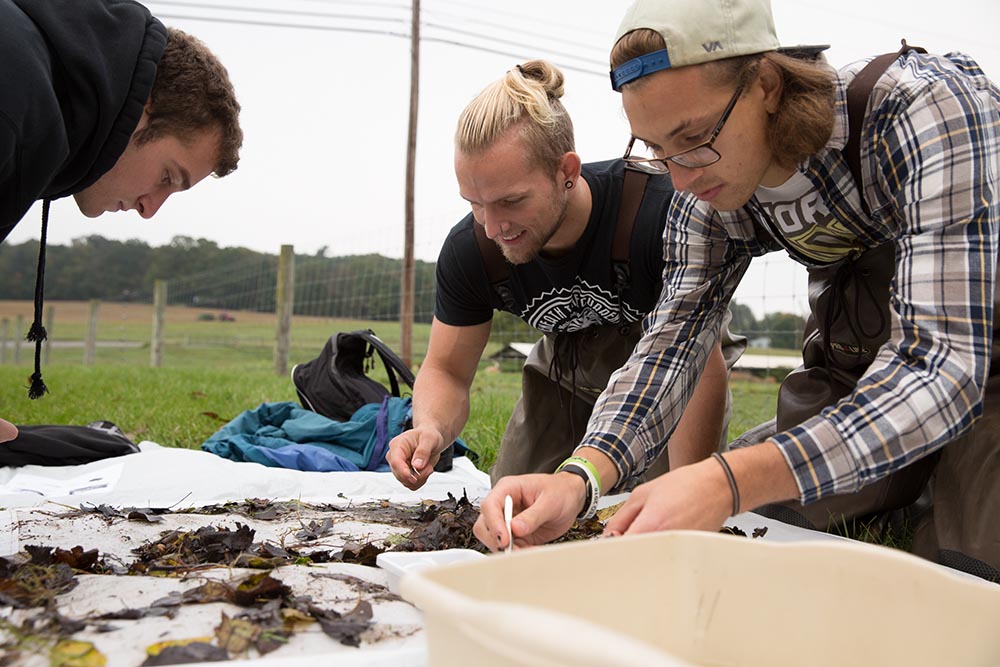
Environmental Science option
Students use their full science toolkit to address environmental challenges. Examples include climate change, energy and air pollution, and more.
Example courses
- Careers and Issues in Environmental Resource Management
- Environmental Geographic Information Systems (GIS)
- Soil and Water Resource Management
- Resource Systems Analysis
- Water Quality
- Legal Aspects of Resource Managment
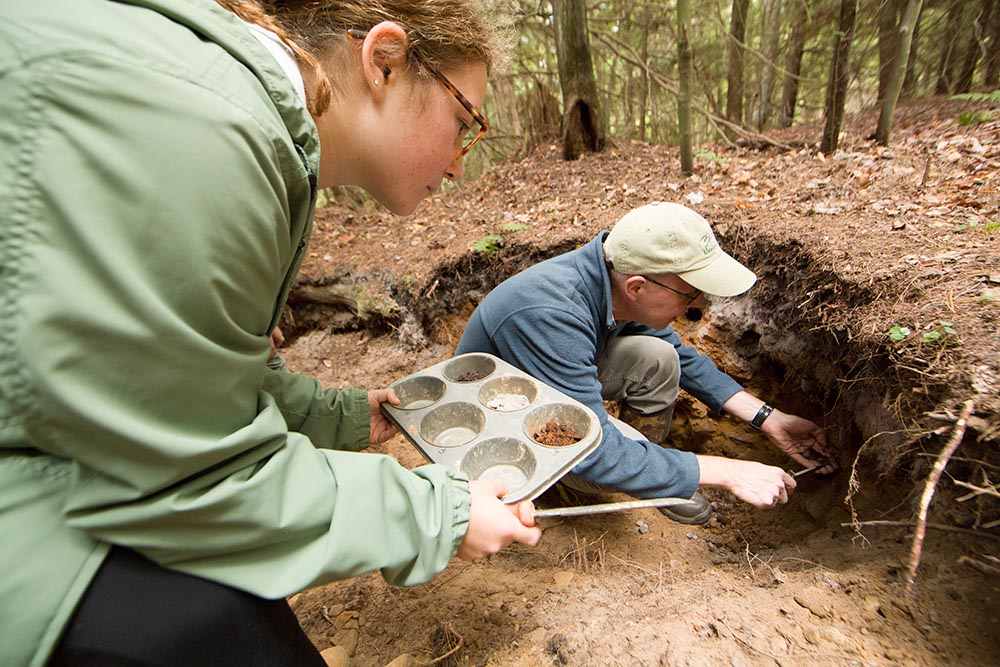
Soil Science option
This path focuses on soil composition and properties, conservation, nutrient management, soil ecology and health, and mapping.
Example courses
- Soil Morphology
- Soil Composition and Physical Properties
- Urban Soils
- Geographic Information Systems (GIS)
- Nutrient Management
- Soil Ecology
- Soil Remediation
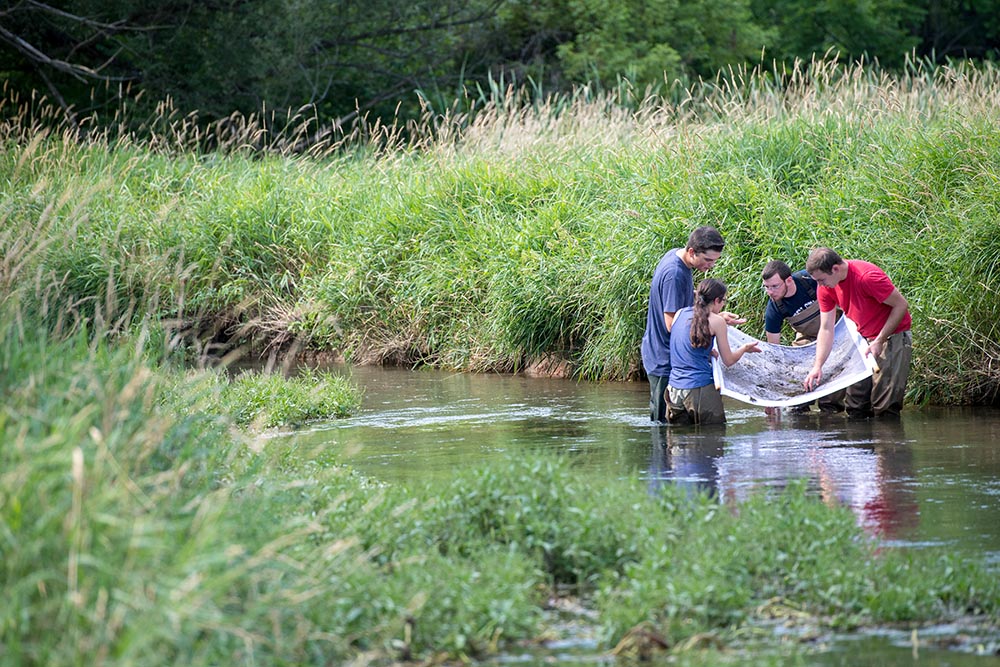
Water Science option
Students take a close look at wetland conservation, stream restoration, stream and lake ecology, watershed management, and land use practices to control runoff and erosion. Grads evaluate water quality and quantity issues, work with government agencies, or continue on to grad school.
Example courses
- Wetland Science and Sustainability
- Aquatic Ecology
- General Fishery Science
- Measurements and Monitoring of Hydrologic Systems
- Soil and Water Resource Management
- Stream Restoration
- Watershed Management
ERM 50th Anniversary
Celebrating 50 Years of Impact: 1971-2021
The Environmental Resource Management (ERM) program was established in 1971 as an interdepartmental, multidisciplinary major to meet the demand for people with the scientific and leadership skills needed to address the enormous environmental challenges of the time.
Ag Journeys
“I couldn’t see myself anywhere else.”
– Jillian Barskey
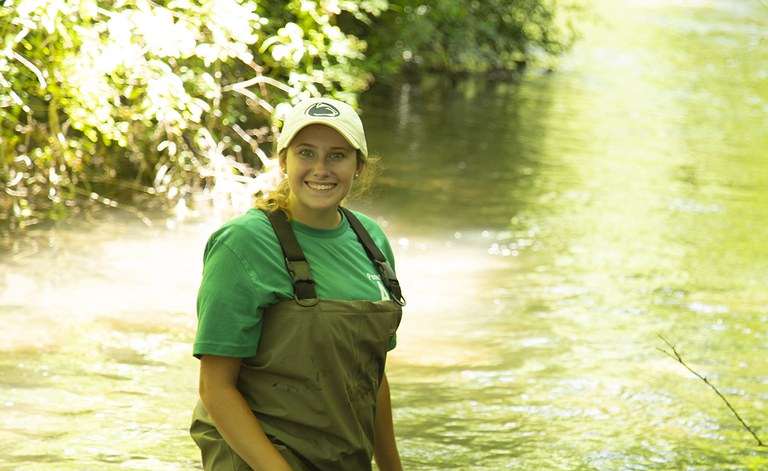
Environmental Resource Management course work is just the tip of the iceberg.
Our faculty are the best in the business, and they’ll be the first to tell you that course work is just one leg of your ERM journey. Connect with your peers, learn from alumni in the workforce through clubs, and seize nearly endless internship, research, and study abroad opportunities.
Craft your experience.
Related clubs and teams
- Environmental Resource Management Society
- Fly Fishing Club
- Soil Judging Team
- Student Farm Club
- Sustainable Agriculture Club
- See all clubs and teams
Recent internships
- Conservation District Water Quality Intern
- Environmental and Social Sustainability
- Environmental Consulting
- Environmental Protection, Air and Water Quality
- Soil Science and Ecology Research
- Water Research / Watershed Restoration
- Watershed and Water Quality
Popular study abroad
- Environmental Studies and Sustainability, Germany
- Sustainability and Natural Resources in Patagonia, Chile
- Sustainable Agriculture and Natural Resources, Costa Rica
- Tropical Island Biodiversity Studies, Panama
- Watersheds of the Wet Tropics, Australia
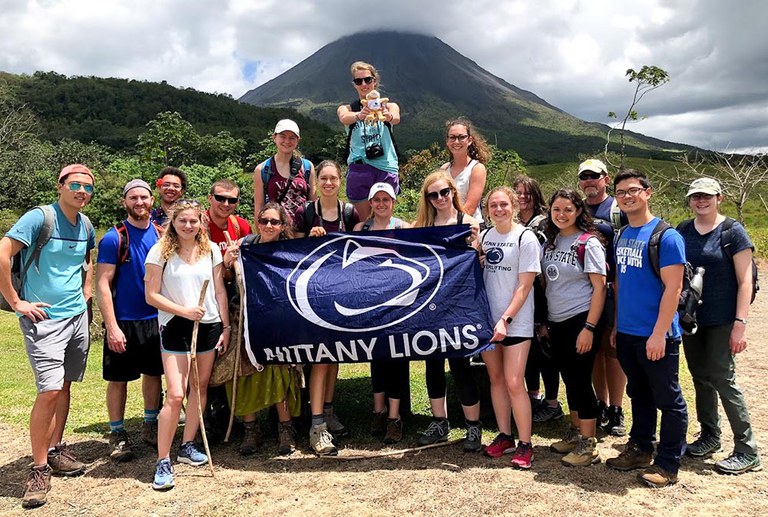

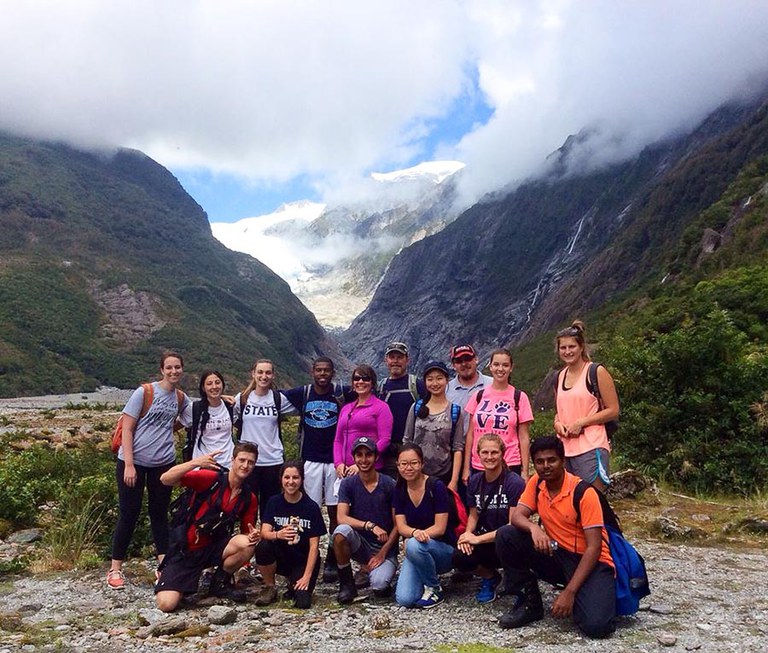
A practical, workforce-ready degree—and a college experience you’ll love.
Penn State ERM grads are making a difference all over the word, right now. You can harness the awesome power of a truly unique education at one of the world’s most prestigious universities. Here’s what some of our alumni are doing.
Our alumni out in the world
- Environmental consulting firms
- Federal and state regulatory agencies
- Corporate sustainability
- State and national parks
- Conservation districts
- Conservancies
- Environmental education organizations
- Municipalities
- Environmental law
- Water quality
- Wetland science
- Non-profit organizations
- Property and land management firms
Environmental Resource Management Career Options
Harness the power of a truly unique education at one of the world’s most prestigious universities. Here are just a few career examples.
Environmental consultant
Environmental consultants work with clients to identify and reduce or eliminate environmental damage.
What will I do?
- Assess environmental impacts connected to business operations
- Create and implement environmentally sound systems and procedures
- Ensure new practices comply with environmental laws and regulations
Wetland scientist
Wetland scientists manage and protect public and private wetland resources.
What will I do?
- Stay current on wetland regulations and scientific standards
- Collect and analyze samples and data
- Record presence of plants, soils, and animals in wetland areas
- Prepare environmental impact studies
- Collaborate with government environmental/law enforcement agencies
Environmental lawyer
ERM graduates may go onto to law school to become an environmental lawyer, a career focused on working with government and corporate entities and using the power of local, state, and federal law to protect the environment.
What will I do?
- Lobby governments for regulations regarding pollution
- Provide expert advice on legal matters pertaining to environmental issues
- Represent groups suing environmental law breakers
One of the best environmental science degree programs
Penn State's Environmental Resource Management major in the College of Agricultural Sciences is rated one of the top 20 environmental science degree programs in the country—number 5, according to SuccessfulStudent.org. Read why we are one of the best!
Environmental Resource Management Students in the News
March 18, 2024
Environmental resource management student is a USDA Future Leader in Agriculture
The U.S. Department of Agriculture has recognized Emma Chaplin, a second-year student majoring in environmental resource management in Penn State’s College of Agricultural Sciences, as a Future Leader in Agriculture.
Read More
March 1, 2024
Student Engagement Network Grants can fund a wide range of student projects
Undergraduate students from all campuses and majors can now apply for a Student Engagement Network Grant to support a variety of engagement experiences during Maymester and summer 2024. Engagement experiences can take many forms and grants of $1,000 to $2,000 can help students cover many kinds of costs.
Read More
February 7, 2024
No place like Antarctica: Students take study abroad trip of a lifetime
For the first time, Penn State students could experience Antarctica’s wonders through an embedded course, “Antarctica: Human Impacts on a Fragile Environment,” offered this past fall.
Read More
January 4, 2024
College of Ag Sciences student aspires to drive innovation in climate solutions
The environmental resource management major offered by Penn State’s College of Agricultural Sciences helps to prepare students for impactful careers centered on environmental protection and sustainability. Demonstrating a commitment to addressing climate challenges, fourth-year student Katherine Chu has embraced the opportunities that the program provides to contribute to innovative solutions.
Read More
Explore More
Resources
- Admissions
- Tuition and Financial Aid
- Scholarships
- Preparing for Veterinary School
- Student Life
- Study Abroad
- Internships
- Entrepreneurship and Innovation
See the University Bulletin for details on program requirements, suggested academic plan, and more.
Contact

- Director of Student Recruitment and Activities
- Email mnm11@psu.edu
- Office 814-863-3942
